
Latest posts
-
From Jupyter Notebook to the Cloud: MLOps Step by Step
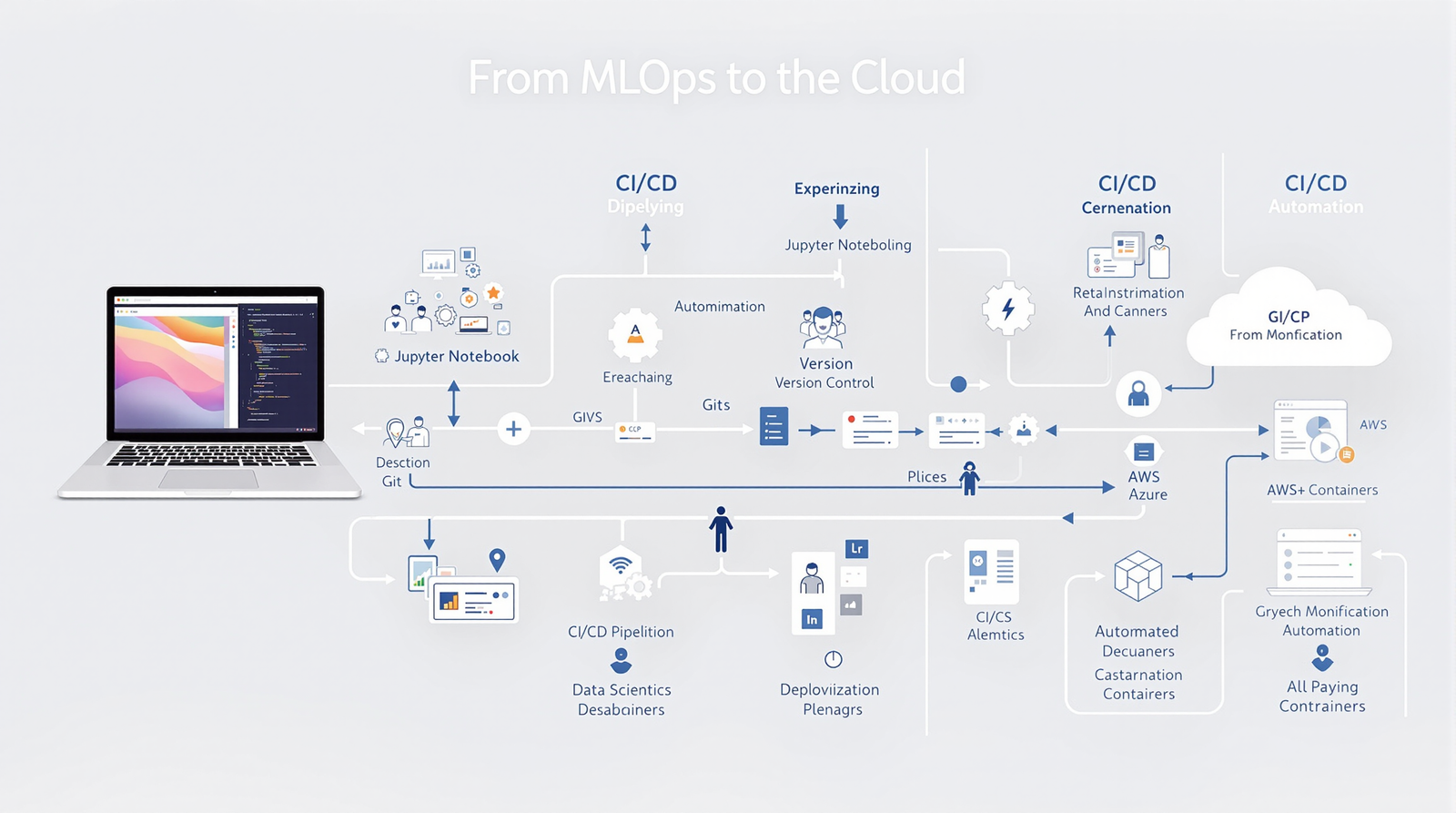
Introduction: Why MLOps Matters for Developers In recent years, the field of machine learning has rapidly evolved from academic research and isolated experiments to a core component of modern software products. For developers, this shift means that building a successful machine learning solution is no longer just about creating an accurate model in a Jupyter…
-
Monitoring ML models in production: tools, challenges, and best practices

Introduction: Why Monitoring ML Models in Production Matters Deploying a machine learning model to production is only the beginning of its lifecycle. Once a model is live, it interacts with real-world data, users, and business processes—often in dynamic and unpredictable environments. Monitoring ML models in production is crucial because it ensures that models continue to…
-
MLOps in Practice: Automation and Scaling of the Machine Learning Lifecycle

Introduction to Automation and Scaling in MLOps Modern organizations are increasingly adopting machine learning at scale, which requires not only effective models but also efficient processes for building, deploying, and maintaining them. MLOps, the practice that combines machine learning with DevOps principles, has become a key factor in the success of AI projects. Automation and…
-
Feature Engineering for MLOps: Building High-Performance Machine Learning Models

Introduction: The Role of Feature Engineering in MLOps Feature engineering is a cornerstone of successful machine learning projects, and its importance only grows in the context of MLOps. While powerful algorithms and scalable infrastructure are essential, the quality and relevance of features often determine the ultimate performance of a model. In MLOps, where the goal…
-
MLOps in the Era of Generative Artificial Intelligence: New Challenges and Opportunities

Introduction: The Rise of Generative AI and Its Impact on MLOps In recent years, generative artificial intelligence has rapidly moved from research labs into mainstream business applications. Technologies such as large language models (LLMs), generative adversarial networks (GANs), and diffusion models are now powering tools for content creation, code generation, image synthesis, and more. This…
-
MLOps: from data science to business value
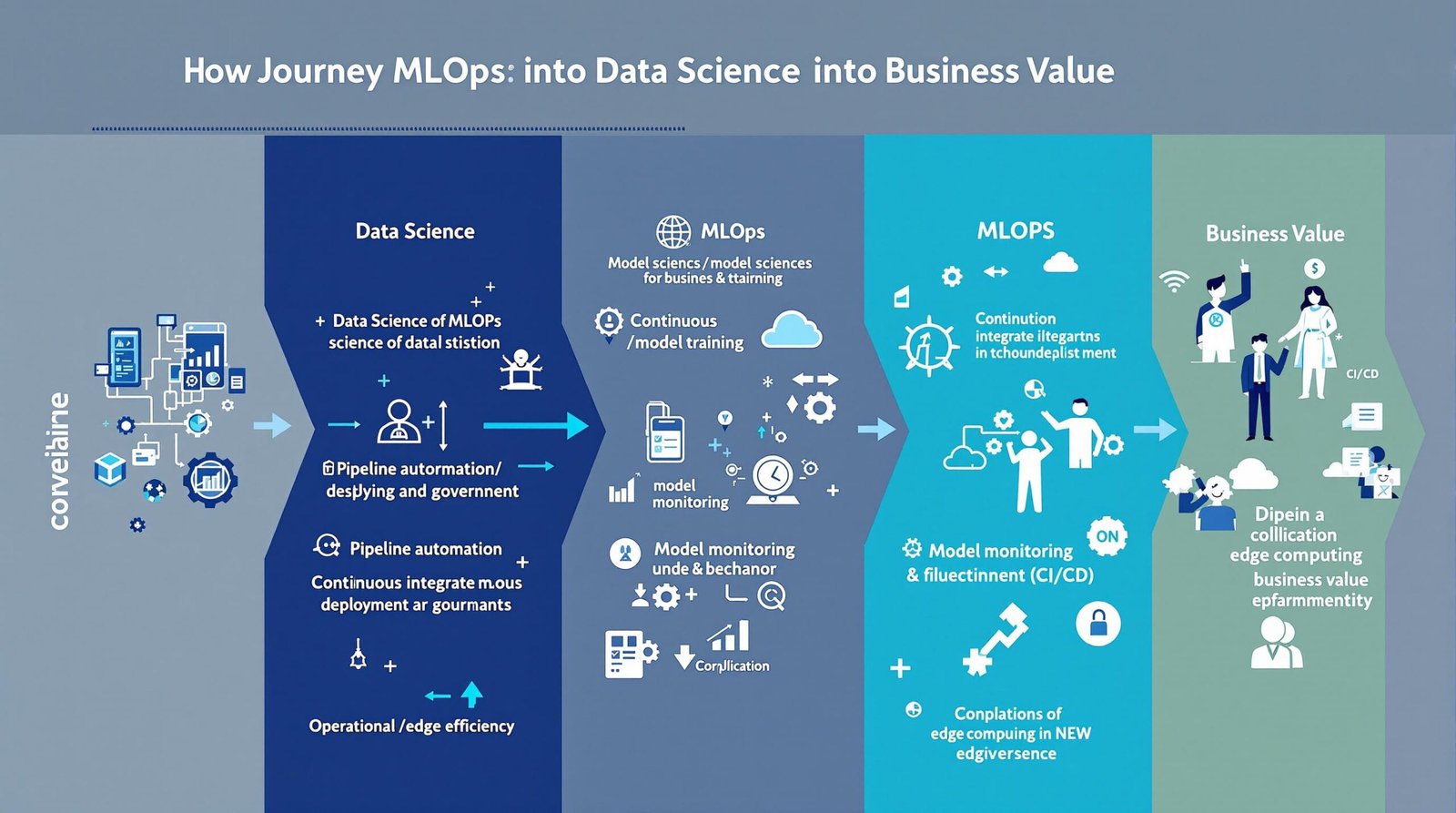
Introduction: Bridging Data Science and Business Goals In recent years, machine learning has become a key driver of innovation across industries. However, the true value of data science is realized only when models move beyond experimentation and start delivering measurable business outcomes. This is where MLOps—Machine Learning Operations—comes into play. MLOps is a set of…
-
The Future of MLOps: Trends and Innovations in Machine Learning Operations

Introduction: The Evolving Role of MLOps In recent years, MLOps has become a cornerstone of successful machine learning initiatives. Originally, MLOps (Machine Learning Operations) emerged as a set of practices and tools designed to bridge the gap between data science and IT operations, enabling organizations to deploy, monitor, and maintain machine learning models at scale.…
-
Monitoring Models in Production – Tools and Strategies for 2025

Introduction: Why Model Monitoring Matters in 2025 As machine learning becomes a core component of business operations, the importance of monitoring models in production has never been greater. In 2025, organizations rely on AI-driven systems for critical decisions in finance, healthcare, retail, and many other sectors. However, deploying a model is not the end of…
-
The best MLOps tools of 2025 – comparison and recommendations

Introduction: Why MLOps Tools Matter in 2025 In recent years, the field of machine learning has rapidly evolved from experimental research to a critical component of business operations across industries. As organizations increasingly rely on machine learning models to drive decision-making, the need for robust, scalable, and efficient processes to manage the entire machine learning…
-
Beyond CI/CD: Advanced Observability Patterns for Production ML Systems Using OpenTelemetry and Prometheus

Introduction The Limits of Traditional CI/CD for ML Systems Continuous Integration and Continuous Deployment (CI/CD) pipelines have revolutionized software development by automating the build, test, and deployment processes. However, when it comes to machine learning (ML) systems, traditional CI/CD approaches face significant limitations. Unlike conventional software, ML models are data-driven and evolve over time as…