Unlocking Data Engineering Velocity: Mastering Change Data Capture for Real-Time Pipelines
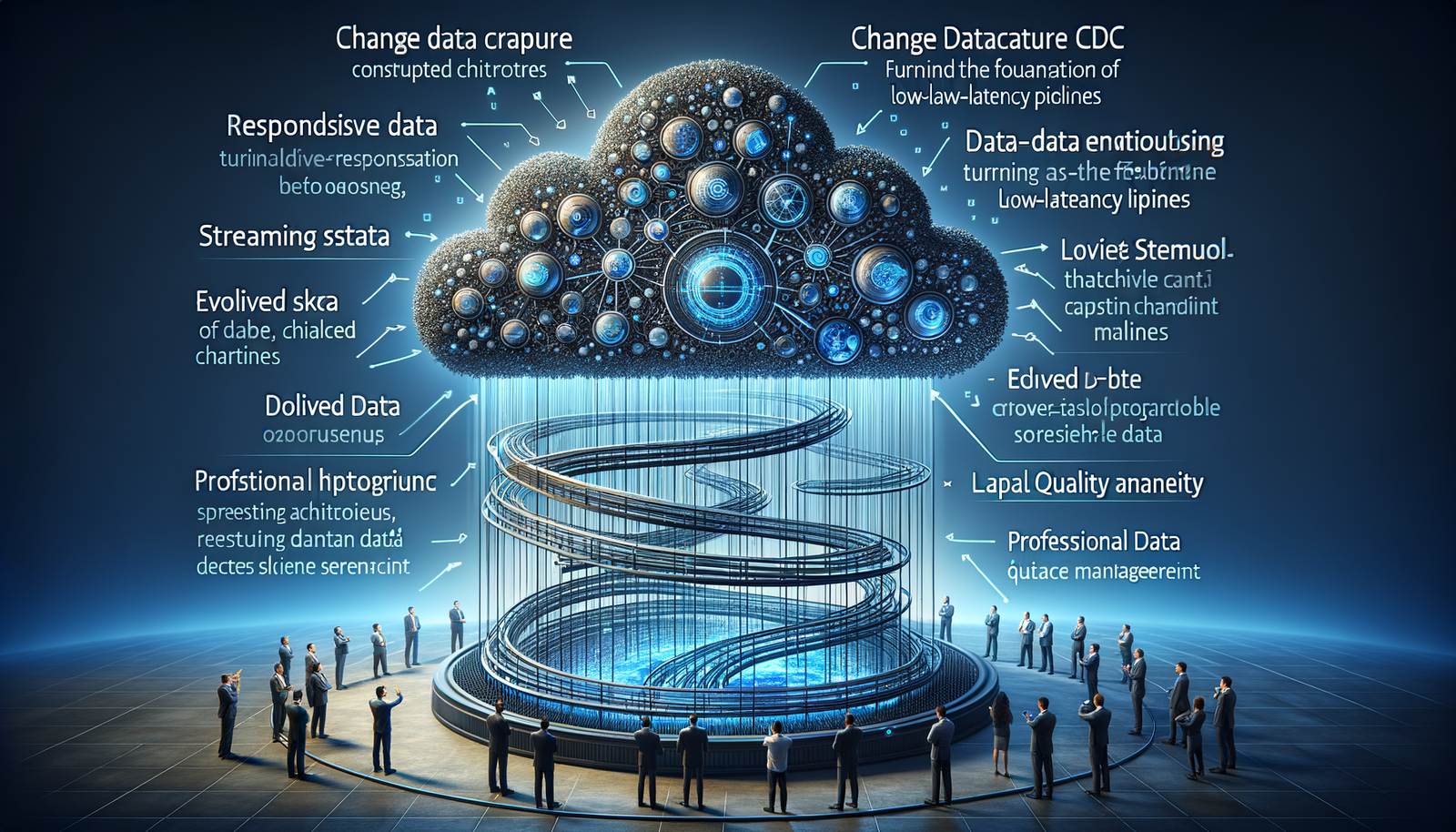
The Critical Role of CDC in Modern data engineering
In today’s fast-paced digital landscape, the ability to capture and react to data changes instantly is a cornerstone of competitive advantage. This is where Change Data Capture (CDC) moves from a niche tool to a foundational component. By tracking insert, update, and delete operations at the database level, CDC enables the creation of low-latency, event-driven architectures that power real-time analytics, microservices synchronization, and reliable data replication. For organizations leveraging data engineering services, implementing a robust CDC strategy is often the key differentiator between batch-oriented legacy systems and agile, modern data platforms.
The technical implementation of CDC typically involves reading database transaction logs (like the Write-Ahead Log in PostgreSQL or the binary log in MySQL). This log-based approach is non-intrusive, avoiding performance hits on the source system. Consider a common use case: maintaining a real-time search index. Instead of periodic full-table scans, a CDC pipeline streams only the changed rows, a task often spearheaded by data engineering experts.
- Step 1: Set up a CDC connector. Using a tool like Debezium, you configure it to connect to your source database.
# Example Debezium connector configuration snippet for PostgreSQL
name: inventory-connector
connector.class: io.debezium.connector.postgresql.PostgresConnector
database.hostname: source-db-host
database.port: 5432
database.user: cdc_user
database.password: ${secure_password}
database.dbname: inventory
plugin.name: pgoutput
slot.name: debezium_slot
publication.name: dbz_publication
table.include.list: public.products,public.orders
- Step 2: Process the change events. Each change is emitted as a structured event (in Avro or JSON) to a streaming platform like Apache Kafka.
{
  "before": {"id": 101, "price": 19.99, "stock": 45},
  "after": {"id": 101, "price": 24.99, "stock": 45},
  "source": {"db": "inventory", "table": "products"},
  "op": "u",
  "ts_ms": 1625097600000,
  "transaction": {"id": "550e8400-e29b-41d4-a716-446655440000"}
}
- Step 3: Ingest into the target system. A downstream service consumes these events to update a data warehouse, cache, or search index in seconds. This end-to-end flow is a core deliverable of professional data engineering services.
The measurable benefits are substantial. Data latency plummets from hours to milliseconds, enabling true real-time dashboards and operational reporting. Source system load is dramatically reduced compared to query-based polling, as only incremental changes are processed. Furthermore, CDC provides a reliable audit trail of all data changes, enhancing governance and compliance. For teams building data science engineering services, this real-time data flow is indispensable, allowing machine learning models to be trained and served on fresh data, significantly improving predictive accuracy and enabling use cases like instant fraud detection.
Mastering CDC requires specific expertise. Data engineering experts must navigate challenges like schema evolution, handling large transactions, and ensuring exactly-once processing semantics. They design idempotent consumers and implement dead-letter queues for error handling. The payoff, however, is a decoupled, scalable architecture. Downstream systems like data warehouses, data lakes, and operational caches can be updated continuously and independently, unlocking unprecedented data engineering velocity. This agility allows businesses to build complex, real-time features—from dynamic pricing and personalized recommendations to IoT monitoring—on a foundation of reliable, instantaneous data flow.
Defining Change Data Capture in data engineering
Change Data Capture (CDC) is a critical design pattern in modern data architecture. It identifies and tracks incremental changes made to data in a source system—such as inserts, updates, and deletes—and delivers those changes in real-time to downstream consumers. This is a fundamental shift from traditional batch-based extraction, which moves entire datasets at scheduled intervals, often leading to data latency and processing overhead. For data engineering services, implementing CDC is a primary strategy for building low-latency, efficient data pipelines that power analytics, machine learning, and operational systems.
At its core, CDC works by monitoring a database’s transaction log (e.g., MySQL’s binlog, PostgreSQL’s Write-Ahead Log, SQL Server’s CDC tables). Instead of querying tables directly, a CDC tool reads this log to capture committed changes as they occur. This approach is minimally invasive, avoiding performance hits on the source OLTP database. The captured change events are typically published to a streaming platform like Apache Kafka, forming a reliable change stream. This stream becomes the single source of truth for data movement, enabling real-time synchronization to data warehouses, data lakes, and other services—a core competency of skilled data engineering experts.
Consider a practical example for an e-commerce application. A traditional batch job might copy the entire orders table every hour, consuming significant resources. With CDC, only the new order inserted moments ago is captured and propagated immediately, optimizing infrastructure.
Here is a simplified step-by-step guide using Debezium, a popular open-source CDC tool, with PostgreSQL:
- Enable logical replication on the PostgreSQL source. This is a one-time configuration.
-- In postgresql.conf, set:
wal_level = logical
max_replication_slots = 10
max_wal_senders = 10
-- Then restart the database
sudo systemctl restart postgresql
- Create a dedicated user and publication.
CREATE USER debezium WITH REPLICATION LOGIN PASSWORD 'secure_password';
GRANT SELECT ON ALL TABLES IN SCHEMA public TO debezium;
CREATE PUBLICATION cdc_publication FOR TABLE orders, customers;
- Configure and deploy the Debezium connector. Submit a JSON configuration to Kafka Connect.
{
  "name": "ecommerce-connector",
  "config": {
    "connector.class": "io.debezium.connector.postgresql.PostgresConnector",
    "database.hostname": "prod-db.company.com",
    "database.port": "5432",
    "database.user": "debezium",
    "database.password": "secure_password",
    "database.dbname": "ecommerce",
    "topic.prefix": "prod-ecommerce",
    "publication.name": "cdc_publication",
    "plugin.name": "pgoutput",
    "table.include.list": "public.orders,public.customers",
    "time.precision.mode": "connect"
  }
}
- Consume the change events from Kafka. Each event has a key, the new data payload, and metadata about the operation. A sample change event for an update might look like this in JSON:
{
  "schema": { ... },
  "payload": {
    "before": {"order_id": 101, "status": "processing", "amount": 99.99},
    "after": {"order_id": 101, "status": "shipped", "amount": 99.99},
    "source": {"version": "1.9.7.Final", "connector": "postgresql", "name": "prod-ecommerce", "ts_ms": 1640995200000, "snapshot": "false", "db": "ecommerce", "sequence": "[\"123456789\",\"123456790\"]", "schema": "public", "table": "orders", "txId": 12345, "lsn": 987654321, "xmin": null},
    "op": "u",
    "ts_ms": 1640995200123
  }
}
The measurable benefits for teams leveraging data science engineering services are substantial. Data latency is reduced from hours to sub-seconds, enabling true real-time analytics and decision-making. Infrastructure load decreases as only deltas are processed, not full tables, leading to cost savings on compute and storage. This efficiency is crucial for data engineering experts who must maintain system performance while scaling to handle massive data volumes. Furthermore, CDC provides a reliable audit trail of all data changes, enhancing data governance and supporting complex use cases like slowly changing dimensions (SCD Type 2) in a data warehouse without cumbersome batch merges.
Ultimately, mastering CDC transforms data pipelines from periodic snapshots into living, breathing systems. It unlocks velocity by ensuring that every application, dashboard, and model operates on the most current state of the data, which is a non-negotiable requirement in today’s fast-paced digital landscape.
How CDC Accelerates Data Engineering Workflows
Change Data Capture (CDC) is a foundational pattern that transforms how data engineering services build and maintain pipelines. By capturing only the incremental changes from source systems—inserts, updates, and deletes—CDC eliminates the need for costly and disruptive full-table reloads. This shift enables data engineering experts to construct pipelines that are not only more efficient but also capable of delivering near real-time data, a critical requirement for modern analytics and operational systems.
Implementing CDC typically involves a few key steps, requiring a blend of database administration and streaming data expertise. First, you must enable change tracking on your source database and set up the replication infrastructure.
- Step 1: Configure the source database. For example, in PostgreSQL, enable logical replication and create a publication.
-- Ensure WAL level is logical (see previous section for details)
-- Create a replication slot for the CDC tool
SELECT * FROM pg_create_logical_replication_slot('debezium_slot', 'pgoutput');
-- Create a publication for specific tables
CREATE PUBLICATION orders_publication FOR TABLE orders, order_items;
- Step 2: Ingest the change stream. Use a CDC tool like Debezium to capture the change events into a streaming platform such as Apache Kafka. Here is a configuration that includes performance-tuning parameters often set by data engineering experts.
# Debezium connector configuration with tuning
connector.class: io.debezium.connector.postgresql.PostgresConnector
database.hostname: prod-db.internal
database.dbname: transaction_db
database.user: replicator
publication.name: orders_publication
slot.name: debezium_slot
snapshot.mode: initial
poll.interval.ms: 100  # How frequently to check for new WAL entries
max.batch.size: 2048   # Max number of records in a single poll
max.queue.size: 8192   # Total queue size for change events
- Step 3: Process and land the data. Stream processors like Apache Flink or Spark Structured Streaming can then consume these events, apply transformations, and write them to a data warehouse or lakehouse. A simple Flink SQL job could aggregate order values in real-time:
-- Create a table from the Kafka topic
CREATE TABLE order_events (
    order_id INT,
    customer_id INT,
    order_total DECIMAL(10,2),
    order_ts TIMESTAMP(3),
    WATERMARK FOR order_ts AS order_ts - INTERVAL '5' SECOND
) WITH (
    'connector' = 'kafka',
    'topic' = 'prod-ecommerce.public.orders',
    'properties.bootstrap.servers' = 'kafka-broker:9092',
    'format' = 'debezium-json'
);

-- Create a real-time dashboard table
CREATE TABLE realtime_customer_spend (
    customer_id INT,
    window_end TIMESTAMP(3),
    total_spend DECIMAL(10,2),
    PRIMARY KEY (customer_id, window_end) NOT ENFORCED
) WITH (
    'connector' = 'jdbc',
    'url' = 'jdbc:postgresql://dwh-host:5432/analytics',
    'table-name' = 'rt_customer_spend'
);

-- Aggregate and upsert
INSERT INTO realtime_customer_spend
SELECT
    customer_id,
    TUMBLE_END(order_ts, INTERVAL '1' MINUTE) AS window_end,
    SUM(order_total) AS total_spend
FROM order_events
WHERE op IN ('c', 'u') -- Capture creates and updates
GROUP BY
    customer_id,
    TUMBLE(order_ts, INTERVAL '1' MINUTE);
The measurable benefits are substantial. Data latency plummets from hours or days to seconds or minutes, enabling immediate business reactions. Infrastructure costs are reduced as you process only changed data, minimizing compute and storage overhead—a key consideration for cost-effective data engineering services. System reliability improves because smaller, incremental loads are less prone to failure and easier to restart than massive batch jobs. This efficiency directly accelerates development cycles, allowing teams to deliver more features and integrate new data sources faster.
For downstream data science engineering services, this velocity is transformative. Instead of working on stale, day-old snapshots, data scientists can build models and dashboards on fresh data, leading to more accurate predictions and timely insights. A real-time feature store, powered by CDC, can serve the latest user behavior to a recommendation engine, directly impacting business metrics like conversion rates. This seamless flow from operational systems to analytical models is the hallmark of a mature data ecosystem built by skilled data engineering experts.
Ultimately, mastering CDC is not just about adopting a technology; it’s about embracing a philosophy of continuous, efficient data flow. It decouples source systems from analytical workloads, reduces risk, and provides the foundational tempo for a truly agile data organization. The technical implementation, while requiring careful planning around schema evolution and idempotency, pays dividends in operational simplicity and strategic capability.
Architecting Real-Time Pipelines: A Data Engineering Blueprint
To build a real-time pipeline, you must first select a robust Change Data Capture (CDC) mechanism. This is the engine that identifies and streams data modifications from source systems. For databases like PostgreSQL, you can use logical decoding, which requires specific setup. The following Python snippet using the psycopg2 and psycopg2-binary libraries demonstrates a foundational step for any data engineering services team: verifying and creating a logical replication slot.
- Example: Verifying and Creating a PostgreSQL Logical Replication Slot
import psycopg2
from psycopg2 import sql

# Connect to the source database
conn_source = psycopg2.connect(
    host="source-db.company.com",
    database="oltp_db",
    user="admin",
    password="${ADMIN_PW}"
)
conn_source.set_isolation_level(psycopg2.extensions.ISOLATION_LEVEL_AUTOCOMMIT)
cur = conn_source.cursor()

# Check if the replication slot already exists
slot_name = "cdc_pipeline_slot"
cur.execute("SELECT slot_name FROM pg_replication_slots WHERE slot_name = %s;", (slot_name,))
if cur.fetchone() is None:
    # Create the logical replication slot using the pgoutput plugin
    create_slot_sql = sql.SQL("SELECT pg_create_logical_replication_slot(%s, 'pgoutput');")
    cur.execute(create_slot_sql, (slot_name,))
    print(f"Created replication slot: {slot_name}")
else:
    print(f"Replication slot {slot_name} already exists.")

cur.close()
conn_source.close()
The captured change events are then published to a durable, high-throughput streaming platform like Apache Kafka. This decouples the source from downstream consumers, a critical pattern for resilience and scalability. A pipeline’s raw stream might contain complex, nested data that needs transformation before consumption. This is where stream processing frameworks like Apache Flink or ksqlDB become invaluable, enabling data science engineering services to work with clean, modeled data in real-time.
- Ingest: Configure your CDC tool (e.g., Debezium) to publish change events to a Kafka topic named
db.inventory.orders. The event schema is crucial for downstream processing. - Process: Use a Flink SQL job to filter, enrich, and transform the stream. For instance, you might join the orders stream with a real-time product lookup table stored in a stateful backend.
-- Example Flink SQL for stream enrichment with a temporal join
-- Assume 'products' is a versioned table in Kafka (e.g., from another CDC stream)
CREATE TABLE products (
    product_id INT,
    product_name STRING,
    category STRING,
    unit_price DECIMAL(10,2),
    update_time TIMESTAMP(3) METADATA FROM 'value.source.timestamp' VIRTUAL,
    WATERMARK FOR update_time AS update_time - INTERVAL '30' SECOND,
    PRIMARY KEY (product_id) NOT ENFORCED
) WITH (
    'connector' = 'kafka',
    'topic' = 'prod-ecommerce.public.products',
    'scan.startup.mode' = 'earliest-offset',
    'properties.bootstrap.servers' = 'kafka-broker:9092',
    'value.format' = 'debezium-json'
);

CREATE TABLE enriched_orders (
    order_id INT,
    customer_id INT,
    product_id INT,
    product_name STRING,
    category STRING,
    quantity INT,
    unit_price DECIMAL(10,2),
    line_total AS quantity * unit_price,
    order_ts TIMESTAMP(3),
    PRIMARY KEY (order_id) NOT ENFORCED
) WITH (
    'connector' = 'jdbc',
    'url' = 'jdbc:postgresql://serving-layer:5432/features',
    'table-name' = 'enriched_orders'
);

-- Temporal join to get the correct product price at the time of the order
INSERT INTO enriched_orders
SELECT
    o.order_id,
    o.customer_id,
    o.product_id,
    p.product_name,
    p.category,
    o.quantity,
    p.unit_price,
    o.order_ts
FROM orders_stream o
LEFT JOIN products FOR SYSTEM_TIME AS OF o.order_ts AS p
ON o.product_id = p.product_id;
- Sink: Write the enriched stream to a serving layer, such as Apache Pinot for low-latency analytics, a cloud data warehouse like Snowflake, or a feature store for ML inference.
The measurable benefits of this blueprint are substantial. It reduces data latency from hours to seconds, enabling immediate fraud detection or live dashboard updates. It also decreases the load on source systems by reading logs instead of polling tables. However, architecting these systems requires data engineering experts to navigate challenges like schema evolution (using a Schema Registry), exactly-once processing semantics (using Kafka transactions and idempotent writes), and state management in streaming jobs. A well-architected pipeline is not just about moving data fast; it’s about creating a reliable, scalable, and observable foundation for real-time decision-making across the organization.
Key Components of a CDC Pipeline in Data Engineering
A robust CDC pipeline is a multi-layered system designed for reliability, low latency, and scalability. At its core, it consists of several integrated components that work in concert, each managed and optimized by professional data engineering services.
The first is the Change Source, typically a transactional database like PostgreSQL, MySQL, or Oracle. Here, CDC mechanisms such as Write-Ahead Log (WAL) tailing, trigger-based capture, or binary log consumption are employed to detect inserts, updates, and deletes. The log-based method is preferred for performance. For example, using Debezium to stream from MySQL involves configuring a connector to read the binlog.
- Connector Configuration Snippet (Debezium/MySQL):
{
  "name": "mysql-inventory-connector",
  "config": {
    "connector.class": "io.debezium.connector.mysql.MySqlConnector",
    "database.hostname": "mysql-host",
    "database.port": "3306",
    "database.user": "debezium",
    "database.password": "${MYSQL_PASSWORD}",
    "database.server.id": "187654",
    "database.server.name": "mysql-inventory",
    "database.include.list": "inventory",
    "table.include.list": "inventory.products,inventory.orders",
    "include.schema.changes": "true",
    "snapshot.mode": "when_needed",
    "database.history.kafka.bootstrap.servers": "kafka:9092",
    "database.history.kafka.topic": "dbhistory.mysql_inventory"
  }
}
The captured change events flow to a Message Broker or Streaming Platform, such as Apache Kafka, Apache Pulsar, or Amazon Kinesis. This component acts as a durable, high-throughput buffer, decoupling the source database from downstream consumers and preventing backpressure. It ensures no data loss during processing spikes and provides replayability. Data engineering services specialize in architecting and tuning this streaming layer for optimal throughput, latency, and retention policies.
Next, the Stream Processor (e.g., Apache Flink, Kafka Streams, or Spark Structured Streaming) consumes the change stream. This is where transformation, enrichment, aggregation, and stateful operations occur. A common and complex task is handling upserts into a data lakehouse format like Apache Iceberg or Delta Lake by maintaining keyed state. For instance, a Flink job can deduplicate events and apply logic to merge changes.
- Simple Flink Java Snippet for Deduplication and Upsert Logic:
DataStream<OrderEvent> orderStream = ... // source from Kafka

SingleOutputStreamOperator<OrderEvent> deduplicatedStream = orderStream
    .keyBy(OrderEvent::getOrderId)
    .process(new DeduplicateProcessFunction());

deduplicatedStream.addSink(
    IcebergSink.forRow(
        deduplicatedStream,
        TableIdentifier.of("prod", "cleaned_orders"),
        TableProperties.getTableProperties(config))
    .build()
);

// Example ProcessFunction for last-write-wins deduplication within a window
public static class DeduplicateProcessFunction extends KeyedProcessFunction<Long, OrderEvent, OrderEvent> {
    private ValueState<OrderEvent> lastEventState;
    @Override
    public void open(Configuration parameters) {
        lastEventState = getRuntimeContext().getState(
            new ValueStateDescriptor<>("lastEvent", OrderEvent.class));
    }
    @Override
    public void processElement(OrderEvent event, Context ctx, Collector<OrderEvent> out) throws Exception {
        OrderEvent lastEvent = lastEventState.value();
        // Basic logic: keep the event with the latest timestamp
        if (lastEvent == null || event.getEventTime() > lastEvent.getEventTime()) {
            lastEventState.update(event);
            out.collect(event); // emit the latest state
        }
    }
}
The processed stream lands in a Target Sink, which could be a data warehouse (Snowflake, BigQuery), a data lakehouse (Iceberg, Delta Lake), or an operational database/cache (Redis, Cassandra). The sink must support efficient merge/upsert operations. The measurable benefit here is the reduction of data latency from hours to seconds, enabling true real-time analytics—a critical capability for data science engineering services that rely on fresh features for machine learning models.
Orchestrating this entire pipeline requires robust Monitoring and Observability. This includes tracking metrics like end-to-end latency, change capture lag (source LSN vs. consumer offset), error rates, and data quality checks (e.g., null counts, schema adherence). Implementing detailed logging, dashboards (Grafana), and alerting (Prometheus, PagerDuty) ensures the pipeline’s health. This operational complexity is precisely why organizations engage data engineering experts to design and maintain these systems, ensuring they are scalable, fault-tolerant, and aligned with business SLAs. The final architecture delivers a continuous, accurate flow of change data, unlocking velocity across all data-dependent applications.
Evaluating CDC Tools: Debezium vs. Fivetran vs. Custom Solutions
Choosing the right Change Data Capture (CDC) strategy is a pivotal architectural decision that directly impacts team velocity, system reliability, and total cost of ownership. Data engineering services often evaluate three primary paths: open-source connectors like Debezium, managed platforms such as Fivetran, and building custom solutions. Each offers distinct trade-offs in control, cost, maintenance overhead, and latency, requiring guidance from experienced data engineering experts.
Debezium, an open-source distributed platform, excels in providing granular control and real-time performance by directly reading database transaction logs. It requires more initial setup and operational knowledge but offers deep integration into your existing data stack (Kafka, schema registries). For instance, deploying a Debezium connector for PostgreSQL involves configuring a Kafka Connect worker and managing the connector lifecycle.
- Step 1: Infrastructure Setup. Deploy Kafka Connect in distributed mode, ensuring the Debezium connector JAR is in the plugin path. Manage worker configurations for scalability and fault tolerance.
- Step 2: Connector Registration. Register the connector via a REST API call or declarative configuration. The JSON configuration specifies critical parameters for performance and reliability.
{
  "name": "prod-postgres-connector",
  "config": {
    "connector.class": "io.debezium.connector.postgresql.PostgresConnector",
    "database.hostname": "primary-db.private.net",
    "database.port": "5432",
    "database.user": "replication_user",
    "database.password": "${secure_vault://db_password}",
    "database.dbname": "core_app",
    "database.server.name": "prod-core-app",
    "table.include.list": "public.users,public.transactions",
    "plugin.name": "pgoutput",
    "slot.name": "debezium_prod_slot",
    "publication.name": "dbz_prod_pub",
    "tombstones.on.delete": "true",
    "column.include.list": "public.users.id,public.users.email,public.users.created_at,public.users.status",
    "snapshot.mode": "initial",
    "max.queue.size": "32768",
    "max.batch.size": "4096"
  }
}
- Step 3: Operational Management. Monitor connector metrics (lag, state), handle schema evolution via a Schema Registry, and plan for failover and upgrades.
The measurable benefit is sub-second latency for real-time data capture with minimal impact on the source database. However, it demands in-house expertise to manage the Kafka ecosystem, monitor lag, handle schema evolution, and ensure high availability. This is where engaging data engineering experts becomes crucial for long-term operational health and performance tuning.
In contrast, Fivetran and similar SaaS platforms (Stitch, Airbyte) abstract away the infrastructure complexity. You provide connection credentials, select tables, and the service handles schema management, normalization, incremental updates, and delivery to a cloud data warehouse. The setup is primarily a configuration exercise.
- Configuration: Log into the Fivetran dashboard and create a new connector (e.g., for PostgreSQL, Salesforce, etc.). Enter your database connection details (often via SSH tunnel for security).
- Sync Setup: Specify sync frequency (e.g., every 5, 15, 30 minutes; true real-time is less common). Select the tables to replicate, optionally set up custom transformations or filters.
- Initiation: The service performs an initial historical sync and then proceeds with incremental updates using its own CDC or query-based methods.
The primary benefit is a dramatic reduction in engineering time for setup and maintenance, accelerating time-to-insight. This is highly attractive for teams that need to quickly provision clean, modeled data for analytics. For teams focused on data science engineering services, this can be ideal for quickly establishing foundational data pipelines, though the batch-oriented sync (typically minutes) may not suit sub-second latency requirements for real-time feature serving. The trade-off is ongoing subscription costs based on data volume and less flexibility for custom transformations before the data lands.
A custom solution, perhaps using database triggers, application-level eventing, or timestamp/version-based query diffing, is rarely the first choice but can be justified for unique constraints. For example, if you must capture changes from a legacy mainframe or a SaaS API with no log access and specific compliance requirements, you might implement a custom polling or webhook mechanism.
# PSEUDO-CODE: Example of a high-level custom polling approach
def poll_for_changes(last_poll_time):
    # Query source for records modified after last_poll_time
    query = """
        SELECT id, data, updated_at
        FROM legacy_system_table
        WHERE updated_at > %s
        ORDER BY updated_at ASC
    """
    changes = execute_query(query, (last_poll_time,))
    for change in changes:
        publish_to_internal_queue(change)
    return get_max_timestamp(changes)

# This requires careful state management and can cause high load on the source.
This approach, while offering ultimate control, incurs high development, testing, and maintenance costs. It creates load on the source system (for query-based methods) and becomes a long-term maintenance burden. It typically only makes sense when supported by deep internal data engineering experts for a very specific, unsupported use case where no commercial or open-source tool fits the technical or compliance constraints.
The evaluation hinges on your team’s resources, expertise, latency SLAs, and budget. For maximum control, real-time streams, and integration with a mature streaming stack, Debezium is powerful but requires significant investment. For velocity, simplicity, and reducing operational burden, a managed service like Fivetran is superior. Custom builds should be approached with extreme caution, reserved for scenarios where no other tool fits the specific technical, compliance, or cost constraints.
Implementing CDC: A Technical Walkthrough for Data Engineers
To implement a robust, production-grade Change Data Capture pipeline, data engineering experts must follow a disciplined approach encompassing source configuration, tool selection, stream processing, and operationalization. This walkthrough focuses on a log-based CDC implementation using open-source tools, a common choice for teams building in-house data engineering services.
Phase 1: Source Database Configuration
The first step is to prepare the source database. For a high-volume PostgreSQL database, ensure wal_level is set to logical and configure appropriate replication parameters.
-- As a superuser, update postgresql.conf (or use ALTER SYSTEM)
ALTER SYSTEM SET wal_level = logical;
ALTER SYSTEM SET max_replication_slots = 10; -- Allocate enough slots for connectors
ALTER SYSTEM SET max_wal_senders = 10;
-- Restart the PostgreSQL service
SELECT pg_reload_conf(); -- If a restart is not immediately possible, but a restart is definitive.

-- After restart, create a dedicated user with replication privileges
CREATE USER cdc_engineer WITH REPLICATION LOGIN PASSWORD '${SECURE_PASSWORD}';
GRANT SELECT ON ALL TABLES IN SCHEMA sales, inventory TO cdc_engineer;

-- Create a logical replication slot (can be done by Debezium automatically, but manual control is good for understanding)
-- SELECT * FROM pg_create_logical_replication_slot('data_pipeline_slot', 'pgoutput');

-- Create a publication for the specific tables
CREATE PUBLICATION sales_cdc_pub FOR TABLE sales.orders, sales.customers, inventory.products;
Phase 2: CDC Ingestion with Debezium and Schema Registry
Next, deploy the CDC ingestion layer using Debezium integrated with a Schema Registry (like Confluent’s or Apicurio) to manage Avro schemas. This ensures backward/forward compatibility as schemas evolve. The connector configuration is submitted to Kafka Connect.
{
  "name": "prod-sales-cdc-connector",
  "config": {
    "connector.class": "io.debezium.connector.postgresql.PostgresConnector",
    "database.hostname": "pg-primary.prod.env",
    "database.port": "5432",
    "database.user": "cdc_engineer",
    "database.password": "${secure_vault://cdc_pw}",
    "database.dbname": "production_db",
    "topic.prefix": "prod-cdc",
    "schema.include.list": "sales,inventory",
    "table.include.list": "sales.orders,sales.customers,inventory.products",
    "plugin.name": "pgoutput",
    "slot.name": "data_pipeline_slot",
    "publication.name": "sales_cdc_pub",
    "tombstones.on.delete": "true",
    "snapshot.mode": "initial",
    "snapshot.locking.mode": "minimal", // Reduces table locking during snapshot
    "provide.transaction.metadata": "true",
    "key.converter": "io.confluent.connect.avro.AvroConverter",
    "key.converter.schema.registry.url": "http://schema-registry:8081",
    "value.converter": "io.confluent.connect.avro.AvroConverter",
    "value.converter.schema.registry.url": "http://schema-registry:8081",
    "transforms": "unwrap,route",
    "transforms.unwrap.type": "io.debezium.transforms.ExtractNewRecordState",
    "transforms.unwrap.drop.tombstones": "false",
    "transforms.route.type": "org.apache.kafka.connect.transforms.RegexRouter",
    "transforms.route.regex": "([^.]+)\\.([^.]+)\\.([^.]+)",
    "transforms.route.replacement": "$1_$2_$3"
  }
}
This connector streams every INSERT, UPDATE, and DELETE as an Avro-encoded event to Kafka topics (e.g., prod-cdc_sales_orders). The ExtractNewRecordState transform simplifies the event payload, and the RegexRouter creates cleaner topic names.
Phase 3: Stream Processing with Apache Flink
Consume the Kafka topics using a stream processing framework. Here’s a more complete PySpark Structured Streaming example that reads the Avro data, applies quality checks, and performs an upsert into a Delta Lake table, a common pattern in lakehouses.
from pyspark.sql import SparkSession
from pyspark.sql.functions import col, from_json, expr, when
from pyspark.sql.avro.functions import from_avro
from pyspark.sql.types import StructType, StringType, LongType, DecimalType, TimestampType

# Initialize Spark session with Delta and Kafka support
spark = SparkSession.builder \
    .appName("CDC_to_Delta") \
    .config("spark.sql.extensions", "io.delta.sql.DeltaSparkSessionExtension") \
    .config("spark.sql.catalog.spark_catalog", "org.apache.spark.sql.delta.catalog.DeltaCatalog") \
    .config("spark.jars.packages", "org.apache.spark:spark-sql-kafka-0-10_2.12:3.3.0,io.delta:delta-core_2.12:2.3.0,org.apache.spark:spark-avro_2.12:3.3.0") \
    .getOrCreate()

# Read the Avro-formatted change stream from Kafka
kafka_df = spark.readStream \
    .format("kafka") \
    .option("kafka.bootstrap.servers", "kafka-broker1:9092,kafka-broker2:9092") \
    .option("subscribe", "prod-cdc_sales_orders") \
    .option("startingOffsets", "latest") \
    .option("failOnDataLoss", "false") \
    .load()

# The Avro schema is retrieved from the Schema Registry via Confluent's SubjectNameStrategy
# In practice, you might fetch this dynamically. Here we use a static schema string for clarity.
# For production, use `from_avro` with a schema registry URL.
avro_schema_string = """{
  "type": "record",
  "name": "envelope",
  "fields": [
    {"name": "before", "type": ["null", {...}], "default": null},
    {"name": "after", "type": ["null", {...}]},
    {"name": "op", "type": "string"},
    {"name": "ts_ms", "type": ["null", "long"], "default": null}
  ]
}""" # Simplified

# Deserialize the Avro value
value_df = kafka_df.select(
    from_avro(col("value"), avro_schema_string).alias("data")
).select(
    "data.after.*",
    "data.op",
    "data.ts_ms"
).filter(
    col("after").isNotNull()  # Filter out tombstones for this pipeline
)

# Add data quality checks: ensure critical fields are present and valid
enriched_df = value_df.withColumn(
    "is_valid",
    when(col("order_id").isNull() | col("customer_id").isNull() | col("order_total").isNull(), False)
    .when(col("order_total") < 0, False)
    .otherwise(True)
)

# Split the stream: valid records to Delta, invalid to a quarantine topic
valid_stream = enriched_df.filter(col("is_valid") == True)
invalid_stream = enriched_df.filter(col("is_valid") == False)

# Define the function to upsert valid records to Delta Lake
def upsert_to_delta(microBatchDF, batchId):
    microBatchDF.createOrReplaceTempView("updates")

    # Use merge for idempotent upsert. Delta Lake handles the transaction.
    microBatchDF._jdf.sparkSession().sql("""
        MERGE INTO delta.`/mnt/data-lake/silver/orders` target
        USING updates source
        ON target.order_id = source.order_id
        WHEN MATCHED AND source.op = 'd' THEN DELETE
        WHEN MATCHED AND source.op IN ('u', 'c') THEN UPDATE SET *
        WHEN NOT MATCHED AND source.op IN ('c', 'u') THEN INSERT *
    """)

# Write the valid stream to Delta Lake
query = valid_stream.writeStream \
    .foreachBatch(upsert_to_delta) \
    .outputMode("update") \
    .option("checkpointLocation", "/mnt/checkpoints/orders_cdc") \
    .trigger(processingTime="30 seconds") \
    .start()

# Write invalid records to a quarantine Kafka topic for analysis
invalid_stream.selectExpr("CAST(order_id AS STRING) AS key", "to_json(struct(*)) AS value") \
    .writeStream \
    .format("kafka") \
    .option("kafka.bootstrap.servers", "kafka-broker:9092") \
    .option("topic", "data_quarantine_orders") \
    .option("checkpointLocation", "/mnt/checkpoints/quarantine_orders") \
    .start()

query.awaitTermination()
This pattern maintains a near real-time replica in the data lake, enabling immediate analytics. The measurable benefits are clear: latency drops from batch windows of hours to seconds, and resource consumption on the source system is drastically reduced compared to full-table scans. The inclusion of data quality gates and a quarantine stream enhances reliability.
Phase 4: Operationalization
Finally, operationalize the pipeline. This involves:
* Monitoring: Track Debezium connector lag (sourceRecordOffset), Kafka consumer lag, Delta merge statistics, and data quality metrics via dashboards.
* Schema Evolution: Use the Schema Registry’s compatibility policies to manage additive changes. Plan for breaking changes with new topic versions.
* Failure Handling: Design idempotent consumers (as shown with MERGE), implement dead-letter queues (the quarantine topic), and establish playbooks for restarting from specific offsets or recovering from snapshot failures.
Engaging with data engineering experts is crucial here to design for complex failure scenarios like duplicate events, out-of-order delivery, or source database failover. The refined data lakehouse created by this CDC pipeline becomes a powerful asset for downstream data science engineering services, providing fresh, reliable data for machine learning features and real-time dashboards, ultimately unlocking significant velocity in data product development.
Step-by-Step: Building a CDC Pipeline with Debezium and Kafka

To build a robust, production-ready real-time data pipeline, we will construct a complete Change Data Capture (CDC) system using Debezium and Apache Kafka. This end-to-end guide is a classic implementation provided by data engineering services, capturing row-level changes from a source database and streaming them as events for immediate downstream consumption. This capability is foundational, allowing teams to react to data changes in seconds, not hours.
Prerequisites:
* A running Apache Kafka cluster (version 2.8+) with Kafka Connect in distributed mode.
* A source PostgreSQL database (version 10+) with logical replication enabled.
* Network connectivity between Kafka Connect workers and the database.
Step 1: Launch Kafka Connect in Distributed Mode.
Kafka Connect is the framework that runs the Debezium source connector. Start it with a configuration file that specifies the REST API port, plugin paths, and internal topic settings. Using Docker Compose simplifies this.
# docker-compose.yml snippet for Kafka Connect
version: '3.8'
services:
  zookeeper:
    image: confluentinc/cp-zookeeper:7.4.0
    environment:
      ZOOKEEPER_CLIENT_PORT: 2181
      ZOOKEEPER_TICK_TIME: 2000
  kafka:
    image: confluentinc/cp-kafka:7.4.0
    depends_on:
      - zookeeper
    environment:
      KAFKA_BROKER_ID: 1
      KAFKA_ZOOKEEPER_CONNECT: zookeeper:2181
      KAFKA_ADVERTISED_LISTENERS: PLAINTEXT://kafka:9092
      KAFKA_OFFSETS_TOPIC_REPLICATION_FACTOR: 1
      KAFKA_TRANSACTION_STATE_LOG_MIN_ISR: 1
      KAFKA_TRANSACTION_STATE_LOG_REPLICATION_FACTOR: 1
  kafka-connect:
    image: debezium/connect:2.3
    depends_on:
      - kafka
    ports:
      - "8083:8083"
    environment:
      BOOTSTRAP_SERVERS: kafka:9092
      GROUP_ID: connect-cluster
      CONFIG_STORAGE_TOPIC: connect-configs
      OFFSET_STORAGE_TOPIC: connect-offsets
      STATUS_STORAGE_TOPIC: connect-status
      CONFIG_STORAGE_REPLICATION_FACTOR: 1
      OFFSET_STORAGE_REPLICATION_FACTOR: 1
      STATUS_STORAGE_REPLICATION_FACTOR: 1
      KEY_CONVERTER: org.apache.kafka.connect.json.JsonConverter
      VALUE_CONVERTER: org.apache.kafka.connect.json.JsonConverter
      INTERNAL_KEY_CONVERTER: org.apache.kafka.connect.json.JsonConverter
      INTERNAL_VALUE_CONVERTER: org.apache.kafka.connect.json.JsonConverter
Start the cluster: docker-compose up -d. Verify Kafka Connect is ready: curl -H "Accept:application/json" localhost:8083/.
Step 2: Register the Debezium PostgreSQL Connector.
Send a POST request to the Kafka Connect REST API. This JSON configuration defines the connector’s behavior. Notice the critical parameters for the database connection, slot name, and the tables to monitor. Data engineering experts fine-tune these for performance.
curl -i -X POST -H "Accept:application/json" -H "Content-Type:application/json" \
  localhost:8083/connectors/ \
  -d '{
    "name": "inventory-connector",
    "config": {
      "connector.class": "io.debezium.connector.postgresql.PostgresConnector",
      "database.hostname": "host.docker.internal", # Connects to host's PostgreSQL
      "database.port": "5432",
      "database.user": "postgres",
      "database.password": "postgres",
      "database.dbname": "inventory",
      "database.server.name": "dbserver1", # Logical namespace for topic prefix
      "table.include.list": "public.customers,public.orders",
      "plugin.name": "pgoutput",
      "slot.name": "debezium_slot_1",
      "publication.name": "dbz_publication",
      "snapshot.mode": "initial",
      "decimal.handling.mode": "precise",
      "include.schema.changes": "false"
    }
  }'
This single deployment is where data engineering experts demonstrate their value, configuring for performance, reliability, and minimal impact on the source.
Step 3: Monitor the Kafka Topics and Initial Snapshot.
Upon registration, Debezium performs several actions:
1. Creates a logical replication slot (debezium_slot_1) in PostgreSQL.
2. Takes a consistent snapshot of the customers and orders tables.
3. Begins streaming all subsequent INSERT, UPDATE, and DELETE operations.
4. Creates Kafka topics: dbserver1.public.customers and dbserver1.public.orders.
You can consume these events to verify the pipeline:
# Consume the topic from the beginning to see snapshot and subsequent events
docker-compose exec kafka /bin/bash -c \
  'kafka-console-consumer --bootstrap-server localhost:9092 \
   --topic dbserver1.public.orders \
   --from-beginning'
Sample output for an UPDATE:
{
  "before": {"order_id": 1001, "customer_id": 204, "status": "placed"},
  "after": {"order_id": 1001, "customer_id": 204, "status": "confirmed"},
  "source": {"version": "2.3.0.Final", "connector": "postgresql", ... "ts_ms": 1678901234567},
  "op": "u",
  "ts_ms": 1678901234789
}
The events are structured in a clear envelope format, containing the state of the row before and after the change, metadata like the operation type, source database info, and transaction ID. This rich, real-time feed is the gold standard for data science engineering services, providing fresh, reliable data for feature stores, real-time analytics, and machine learning models without batch lag.
Step 4: Build a Downstream Consumer (Example with ksqlDB).
The real power is in processing this stream. Using ksqlDB, you can easily create materialized views. First, register the Kafka topic as a stream:
CREATE STREAM orders_stream (
    before STRUCT<order_id INTEGER, customer_id INTEGER, status VARCHAR>,
    after STRUCT<order_id INTEGER, customer_id INTEGER, status VARCHAR>,
    source STRUCT<db VARCHAR, table VARCHAR, ts_ms BIGINT>,
    op VARCHAR,
    ts_ms BIGINT
) WITH (
    KAFKA_TOPIC='dbserver1.public.orders',
    VALUE_FORMAT='JSON'
);

-- Create a cleaned stream with just the latest state and operation
CREATE STREAM orders_clean AS
    SELECT
        after->order_id AS order_id,
        after->customer_id AS customer_id,
        after->status AS status,
        op,
        ts_ms
    FROM orders_stream
    WHERE after IS NOT NULL
    EMIT CHANGES;

-- Create a real-time table counting orders by status
CREATE TABLE orders_by_status AS
    SELECT
        status,
        COUNT(*) AS order_count,
        AS_VALUE(status) AS status_value
    FROM orders_clean
    GROUP BY status
    EMIT CHANGES;

-- Query the table
SELECT * FROM orders_by_status WHERE status_value = 'confirmed' EMIT CHANGES;
The measurable benefits are immediate. Latency from database change to event availability drops from hours (with batch extraction) to milliseconds. Efficiency improves as pipelines eliminate wasteful full-table scans, reducing load on source systems. Reliability is enhanced through Debezium’s transaction-aware logging and Kafka’s durability, ensuring no change is lost. Finally, this pipeline unlocks velocity; new analytics and applications can be built on a live stream of data, accelerating innovation across the business—a core objective of professional data engineering services.
Handling Schema Evolution and Data Quality in Real-Time Data Engineering
In real-time pipelines, schema evolution is not an exception but an expectation. As source applications update, new fields appear, data types change, or columns are deprecated. A robust CDC strategy, as implemented by skilled data engineering experts, must handle these changes without breaking downstream consumers or halting data flow. The core principle is to decouple the ingestion of change events from their interpretation, typically using a schema-on-read approach facilitated by a schema registry.
Consider a scenario where a users table adds a preferred_language column (STRING, nullable). A naive pipeline consuming raw JSON might encounter unknown fields and fail. Instead, using a tool like Debezium with an Avro converter and a schema registry (e.g., Confluent Schema Registry or Apicurio) manages compatibility gracefully.
- How it Works: Debezium serializes each change event using an Avro schema that is automatically registered in the registry. When the source table schema changes (e.g., a column is added), Debezium detects it and registers a new version of the Avro schema. The registry, configured with a compatibility policy (e.g.,
BACKWARD), ensures the new schema can be read by consumers using the old schema (new fields will be ignored or filled with defaults). - Configuration:
{
  "connector.class": "io.debezium.connector.postgresql.PostgresConnector",
  ...
  "key.converter": "io.confluent.connect.avro.AvroConverter",
  "key.converter.schema.registry.url": "http://schema-registry:8081",
  "value.converter": "io.confluent.connect.avro.AvroConverter",
  "value.converter.schema.registry.url": "http://schema-registry:8081",
  "value.converter.schemas.enable": "true",
  "value.converter.enhanced.avro.schema.support": "true"
}
Downstream, in your stream processing logic, you can handle evolution. In Apache Flink, you can use the Kafka Avro Deserialization that dynamically fetches the schema.
// Flink Java example with Confluent Registry
Properties props = new Properties();
props.setProperty("bootstrap.servers", "kafka:9092");
props.setProperty("group.id", "flink-consumer");

FlinkKafkaConsumer<GenericRecord> consumer = new FlinkKafkaConsumer<>(
    "topic-name",
    new ConfluentRegistryAvroDeserializationSchema<>(GenericRecord.class, "http://schema-registry:8081"),
    props
);

DataStream<GenericRecord> stream = env.addSource(consumer);
// Process GenericRecord, checking for existence of fields
In PySpark, you can define a flexible schema or use a utility to fetch it from the registry, allowing graceful handling of missing or new fields.
# PySpark - Using a permissive schema or inferring from a sample
from pyspark.sql.types import StructType, StructField, StringType, LongType, IntegerType

# Base schema - can be minimal; Spark will add nulls for missing fields in JSON
base_schema = StructType([
    StructField("user_id", IntegerType(), True),
    StructField("email", StringType(), True),
    StructField("created_at", LongType(), True)
])

df = spark.readStream.format("kafka")...
# Parse JSON with a schema that allows additional fields (spark.sql.jsonGenerator.ignoreNullFields can help)
parsed_df = df.select(
    from_json(col("value").cast("string"), base_schema, {"mode": "PERMISSIVE"}).alias("data")
).select("data.*")
This ensures your pipeline remains resilient. However, schema handling is only half the battle. Data quality must be monitored and enforced in real-time to maintain trust. Implementing data contracts—explicit agreements on schema, freshness, validity ranges, and uniqueness—between producers (source apps) and consumers (analytics, ML) is becoming a best practice.
Embedding validation checks within the stream processing logic catches anomalies early. You can use a lightweight library like Great Expectations for Spark or implement custom rule engines.
A practical step-by-step guide for a quality gate in a Flink pipeline:
- Define Quality Rules: In your stream processor, define key validation rules: non-null constraints for critical fields (e.g.,
user_id), allowed value enumerations (e.g.,status IN ('active','inactive','pending')), numeric range checks, and schema validation success rate. - Branch the Stream: Use a
ProcessFunctionorSide Outputto split the stream: one path for valid data destined for the target (like a data lake or serving layer), another for invalid records routed to a quarantine topic or table for forensic analysis. - Emit Metrics: Route validation metrics (counts of passed/failed records per rule) to a metrics system like Prometheus via a custom reporter.
- Visualize and Alert: Build dashboards in Grafana to monitor data quality SLAs in real-time. Set up alerts (e.g., in PagerDuty) to trigger when the failure rate for a critical rule exceeds a threshold (e.g., >0.1% for 5 minutes).
- Remediate: Implement jobs to periodically analyze quarantined data, identify root causes (e.g., a buggy source application release), and either fix the source or create exception rules. For critical pipelines, you might implement a manual or automated remediation stream that feeds corrected records back into the main flow.
The measurable benefits are substantial. Teams experience fewer production outages due to unexpected schema changes. Time-to-detection for data corruption shrinks from hours (in batch) to seconds. Trust in real-time analytics and ML models increases, fostering greater adoption. This operational excellence in managing evolution and quality is where data engineering experts prove their value, architecting systems that are both resilient and adaptable. Furthermore, reliable, high-quality real-time data directly accelerates data science engineering services, enabling accurate, fresh feature stores for ML models and trustworthy A/B test analysis. Ultimately, mastering these aspects is a core offering of modern data engineering services, transforming CDC from a simple replication tool into the foundation for a trustworthy, agile, and high-velocity data ecosystem.
Conclusion: The Future of Velocity in Data Engineering
The pursuit of velocity in data engineering is fundamentally shifting from batch-oriented thinking to a paradigm of continuous, real-time data flow. Mastery of Change Data Capture is the cornerstone of this evolution, enabling systems to react to business events as they happen. This real-time capability is no longer a luxury but a baseline expectation, powering everything from dynamic pricing engines and instant fraud detection to live customer 360 views. The future belongs to architectures where data pipelines are not just fast, but intelligent, adaptive, and unified with machine learning lifecycles.
To operationalize this future, engineering teams must embrace a toolkit and mindset built for streaming-first design. Consider a scenario where a data engineering services team implements a complete CDC pipeline from a PostgreSQL database to Apache Kafka, processed by Flink, and finally landed in a cloud data warehouse like Snowflake for analytics and a feature store for ML. The measurable benefit is a reduction in data latency from hours to sub-seconds and a significant increase in data team productivity.
Here is a consolidated view of the step-by-step guide using open-source tools:
- Configure Source & Capture: Enable logical replication on PostgreSQL and deploy a tuned Debezium connector.
{
  "name": "prod-orders-connector",
  "config": {
    "connector.class": "io.debezium.connector.postgresql.PostgresConnector",
    "database.hostname": "pg-cluster.prod",
    "database.dbname": "transactions",
    "table.include.list": "public.orders",
    "plugin.name": "pgoutput",
    "slot.max.retention.ms": "86400000" // 24-hour retention for the slot
  }
}
- Process & Enrich: Use Apache Flink for complex stream processing—joining, aggregating, and cleansing in motion.
-- Flink SQL: Creating a real-time customer session summary
CREATE TABLE realtime_sessions AS
SELECT
    customer_id,
    TUMBLE_START(event_time, INTERVAL '1' HOUR) AS session_start,
    COUNT(*) AS events,
    SUM(order_value) AS total_value
FROM enriched_order_stream
GROUP BY customer_id, TUMBLE(event_time, INTERVAL '1' HOUR);
- Serve & Consume: Sink the processed streams to both analytical stores (Snowflake) and operational stores (Redis for feature serving).
The downstream impact is profound. For data science engineering services, this velocity translates directly into model accuracy and relevance. Instead of training models on stale, day-old data, machine learning pipelines can be retrained incrementally with the latest state changes via streaming frameworks like Apache Flink ML or Kafka-native feature stores, leading to more predictive and responsive AI applications. The measurable benefit is a tangible improvement in model performance metrics, such as precision and recall, by significant margins in dynamic environments, directly impacting revenue and customer experience.
Looking ahead, the role of data engineering experts will evolve from pipeline builders to architects of stateful, event-driven ecosystems. Key trends defining the future stack include:
* Streaming Materialized Views: Systems like RisingWave and Materialize that allow SQL queries over streams with millisecond latency, blurring the line between OLAP databases and stream processors.
* MLOps Integration: The convergence of data and ML pipelines, with CDC streams feeding online feature stores (e.g., Feast, Tecton) that serve low-latency features for real-time inference, creating a closed-loop from prediction to action to feedback.
* Declarative Pipeline Frameworks: Tools like Apache NiFi, Delta Live Tables, and Kestra that abstract away complex low-level orchestration code, allowing data engineering services to focus on business logic and data contracts rather than operational plumbing.
* Universal CDC and Cataloging: Tools that can capture changes from any source (databases, SaaS APIs, message queues) and automatically register them in a data catalog (e.g., DataHub, Amundsen), creating a real-time inventory of data assets.
The future stack will be defined by its ability to handle not just the velocity of data, but also the velocity of change—allowing schemas, business logic, destination sinks, and ML models to evolve continuously without pipeline downtime. The ultimate competitive advantage will be held by organizations whose data infrastructure, built and maintained by skilled data engineering experts, can keep pace with the speed of their business decisions, turning every data point into an immediate opportunity for insight and action.
Summarizing the CDC Advantage for Data Engineering Teams
For data engineering teams, the strategic adoption of Change Data Capture (CDC) is a transformative force that redefines efficiency and capability. It fundamentally shifts the paradigm from periodic batch synchronization to a continuous, event-driven flow of data changes. This capability is central to modern data engineering services, enabling the construction of low-latency, reliable pipelines that power real-time analytics, operational reporting, and machine learning systems. The core advantage lies in precision and efficiency: CDC extracts only the inserted, updated, or deleted records from source systems by reading transaction logs, dramatically reducing the data volume processed compared to full-table loads. This translates directly into measurable business and technical benefits: reduced network bandwidth consumption, lower compute and storage costs, and minimized performance load on source operational databases, all while providing data that is orders of magnitude fresher.
Implementing a production CDC pipeline involves a logical sequence best executed by data engineering experts:
- Step 1: Configure the Source Database and Connector. This involves enabling log-based replication and deploying a connector like Debezium with careful configuration for performance and fault tolerance.
{
  "name": "mysql-inventory-cdc",
  "config": {
    "connector.class": "io.debezium.connector.mysql.MySqlConnector",
    "database.hostname": "mysql-primary",
    "database.user": "debezium",
    "database.password": "${SECRET}",
    "database.server.name": "prod-mysql",
    "database.history.kafka.bootstrap.servers": "kafka:9092",
    "table.include.list": "inventory.products",
    "snapshot.mode": "schema_only_recovery" // For advanced recovery scenarios
  }
}
- Step 2: Ingest and Buffer the Change Stream. The connector publishes structured events to Kafka topics. Each event is a self-contained record of change, ideal for replay and multiple downstream uses.
- Step 3: Process, Validate, and Deliver. Downstream services consume this stream. A stream processor enriches data, applies quality checks, and routes it. For example, a Flink job might write changes to a cloud data warehouse like Snowflake and simultaneously update a Redis cache for application use, ensuring near-real-time data availability for both data science engineering services (for model training) and customer-facing applications.
The operational and strategic impact is profound. Data pipelines become more resilient and recoverable, as CDC provides a durable, ordered log of all changes, simplifying recovery from failures by allowing replay from a specific point. It elegantly enables the implementation of modern data architectures like the medallion (bronze, silver, gold) architecture on a lakehouse, where incremental CDC feeds are merged into silver/gold tables without costly full recomputations. For business intelligence, this means dashboards and reports reflect the state of the business within seconds, enabling truly data-driven decision-making. For product and engineering teams, it unlocks advanced capabilities like real-time personalization, instant fraud detection, and microservices data synchronization.
Ultimately, by mastering CDC, data engineering teams transition from being custodians of static, periodic data dumps to becoming architects of dynamic, responsive data ecosystems. They provide a foundational service that drives immediate business value, reduces operational overhead, and creates a platform for innovation. This transformation is the hallmark of a mature, velocity-oriented data organization powered by skilled data engineering experts and comprehensive data engineering services.
Next-Generation Trends: CDC and the Streaming Data Engineering Stack
The evolution of data engineering services is increasingly defined by the deep integration of Change Data Capture (CDC) into a unified, powerful streaming stack. This moves beyond simple database replication, treating every data change as a first-class event in a real-time processing pipeline that spans ingestion, transformation, serving, and machine learning. The modern architecture leverages Debezium as the CDC connector, Apache Kafka (or Pulsar) as the durable log, Apache Flink as the stateful stream processor, and Streaming Databases/Materialized View Engines as the serving layer, creating a comprehensive foundation for sub-second analytics and event-driven applications.
Implementing this next-generation stack begins with deploying and managing Debezium connectors at scale, a task for data engineering experts. For a PostgreSQL source, the connector streams changes into Kafka in a robust format.
- Step 1: Configure Debezium Connector with Best Practices
A configuration that includes performance tuning, monitoring, and integration with a Schema Registry is standard for production.
{
  "name": "pg-prod-connector",
  "config": {
    "connector.class": "io.debezium.connector.postgresql.PostgresConnector",
    "database.hostname": "pg-ha-cluster.internal",
    "database.dbname": "core_app",
    "table.include.list": "public.users,public.sessions",
    "plugin.name": "pgoutput",
    "slot.name": "flink_consumer_slot",
    "publication.name": "all_tables_pub",
    "transforms": "addMetadata,route",
    "transforms.addMetadata.type": "org.apache.kafka.connect.transforms.InsertField",
    "transforms.addMetadata.timestamp.field": "ingestion_ts_ms",
    "transforms.route.type": "io.debezium.transforms.ByLogicalTableRouter",
    "transforms.route.topic.regex": "(.*)",
    "transforms.route.topic.replacement": "cdc_$1",
    "message.key.columns": "public.users:id,public.sessions:session_id",
    "poll.interval.ms": 100
  }
}
- Step 2: Process with Apache Flink for Advanced Use Cases
Flink’s strength is in complex, stateful operations over unbounded streams. A Flink SQL job can consume CDC topics to create real-time materialized views, detect patterns, or train online ML models.
-- Flink SQL: Detect potential fraud by tracking rapid-fire orders from the same user
CREATE TABLE potential_fraud_alerts AS
SELECT
    user_id,
    COUNT(*) AS order_count,
    MIN(order_ts) AS first_order_time,
    MAX(order_ts) AS last_order_time,
    'RAPID_ORDERS' AS alert_type
FROM user_orders_stream
GROUP BY user_id, TUMBLE(order_ts, INTERVAL '1' MINUTE)
HAVING COUNT(*) > 5; -- More than 5 orders in a minute
- Step 3: Serve via Streaming Databases
The output of Flink jobs or the raw CDC streams can be ingested into streaming databases like RisingWave, Materialize, or Apache Pinot. These systems allow you to define SQL views that are continuously updated as new data arrives, serving queries with millisecond latency.
-- In RisingWave, creating a materialized view from a Kafka source (populated by Debezium)
CREATE SOURCE pg_users_source (
    id BIGINT,
    email VARCHAR,
    last_login TIMESTAMP,
    op VARCHAR
) WITH (
    connector='kafka',
    topic='cdc_public_users',
    properties.bootstrap.server='kafka:9092',
    scan.startup.mode='latest'
) FORMAT DEBEZIUM ENCODE JSON;

CREATE MATERIALIZED VIEW active_users_last_hour AS
SELECT COUNT(DISTINCT id) AS active_count
FROM pg_users_source
WHERE last_login > NOW() - INTERVAL '1' HOUR
  AND op != 'd'; -- Ignore delete operations
The measurable benefits are substantial and multi-faceted. This architecture reduces end-to-end data pipeline latency from hours to milliseconds, enabling true real-time decision loops. It decouples services at an unprecedented level, allowing downstream systems—data warehouses, caches, search indexes, and ML feature stores—to update independently and efficiently without ever querying the source database. For data science engineering services, this integrated stream is invaluable; it provides a direct, consistent feed of fresh, event-level data for online feature stores (e.g., Feast) and supports continuous model evaluation and retraining, dramatically improving prediction accuracy and adaptability.
To master this architecture, partnering with experienced data engineering experts is crucial. They navigate the complexities of exactly-once processing semantics (using Kafka transactions and Flink’s checkpointing), schema evolution with Avro/Protobuf and registries, stateful stream operations at petabyte scale, and the observability of distributed streaming systems. The result is a resilient, scalable, and intelligent backbone that transforms CDC from a tactical replication tool into the core nervous system for a modern data platform. This stack unlocks unprecedented velocity in data product development, allowing businesses to not only analyze the past but also understand and act upon the present as it happens.
Summary
This article has detailed the pivotal role of Change Data Capture (CDC) as the engine for achieving true velocity in modern data platforms. We explored how CDC, by streaming incremental database changes in real-time, forms the foundation of low-latency pipelines essential for competitive analytics and operations. The implementation requires specific expertise, often provided by professional data engineering services, to navigate tools like Debezium and Kafka, manage schema evolution, and ensure data quality. For teams building data science engineering services, CDC is indispensable, delivering the fresh, event-level data needed to power accurate machine learning models and real-time feature stores. Ultimately, mastering CDC empowers organizations to move beyond batch processing, enabling data engineering experts to construct responsive, event-driven architectures that turn instantaneous data changes into immediate business value.